


Best Spices and Blends to Use with Scrambled, Fried, and Poached Eggs

What Spices Go Well with Scrambled Eggs?

Salt and pepper are the default. Reach for the shaker, give the eggs a shake, done. The problem is that eggs are an especially receptive canvas for other flavors, and stopping at salt and pepper leaves most of that potential untouched. If you've ever wondered what spices go with eggs beyond the basics, the answer starts with smoked paprika, za'atar, curry powder, and fresh chives, each of these transforms a plate of eggs in a different direction, and none requires anything more technical than knowing when and how much to add.
Figuring out which seasonings belong with which egg preparation is the real shortcut here. A spice that's perfect for scrambled eggs might overwhelm a delicate poached egg, and a finishing blend like Tajín tastes flat when cooked in rather than sprinkled on top. This guide maps specific spices, herbs, and blends to five egg styles, gives you timing rules and dose guidelines, and ends with two recipes you can make tonight. Unique Flavors carries signature blends and bulk packs.
What Spices Go With Eggs: Matchups by Cooking Method
The most important variable isn't the spice itself; it's how the egg is cooked. Scrambled eggs have fat coating every surface, which means they can handle bolder, more aggressive spices. Poached eggs are delicate and wet, so the seasoning needs to live in whatever surrounds them. Fried eggs take finishing sprinkles beautifully because the yolk's richness balances sharp or acidic blends applied after the heat is off.
Spices for Scrambled Eggs and Omelets
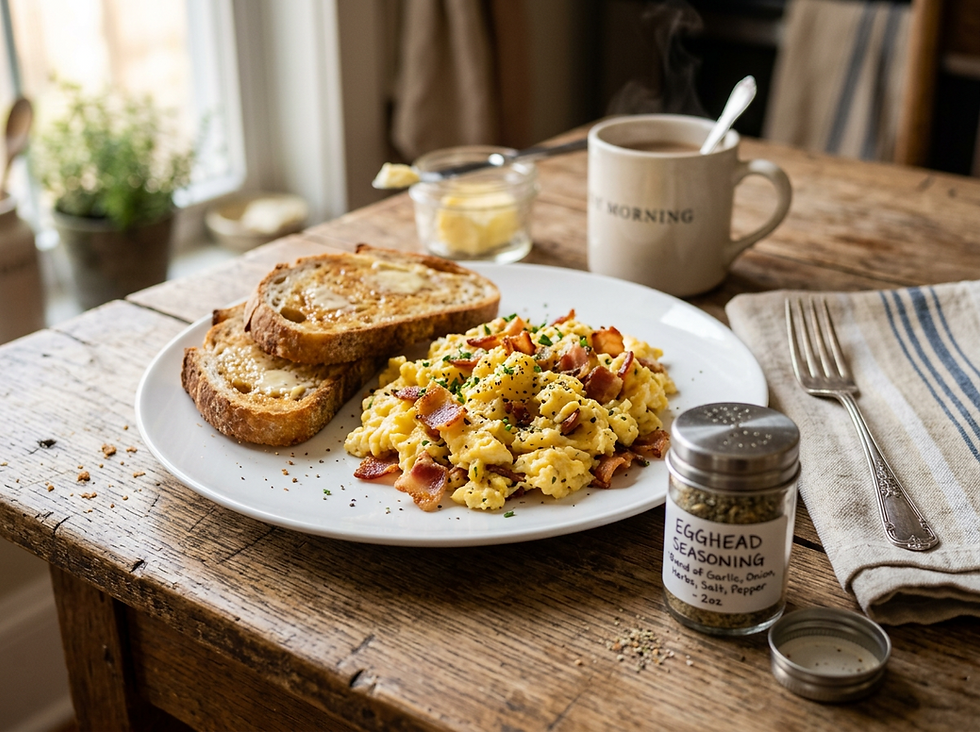
Scrambled eggs are the most forgiving canvas. Smoked paprika, garlic powder, black pepper, cumin, and chili flakes all work well here, and they can go in at the butter stage or whisked directly into the eggs before cooking. A simple combination that delivers every time: a quarter teaspoon of smoked paprika, a small pinch of black pepper, and a teaspoon of chives stirred in just before the pan comes off heat. Fresh herbs like chives, parsley, and tarragon are finishing ingredients rather than cooking-in ones, they lose brightness fast under sustained heat, so hold them until the last thirty seconds or scatter them on after plating.
How to Season Fried and Poached Eggs
Fried eggs are where finishing blends earn their place. Za'atar, Tajín, smoked paprika, and red pepper flakes all work as a sprinkle over the finished egg, adding contrast without muddying the crispy whites. Poached eggs are a different story: the seasoning lives in the sauce or cooking liquid around them. Cajun seasoning stirred into a tomato base, or curry powder bloomed in olive oil before tomatoes go in, gives poached eggs serious depth without requiring any direct seasoning at all. Shakshuka is the clearest proof of this principle in action.
Egg Salad and Deviled Eggs
Cold preparations need more seasoning than hot ones because heat normally amplifies aroma. When the egg is cold, dried spices have to carry the flavor on their own, so don't be shy. Smoked paprika, curry powder, celery seed, mustard powder, and fresh dill are the go-to options here. Paprika is especially traditional in deviled eggs, where it does double duty as garnish and seasoning. For egg salad, dill and curry powder are the two combinations worth learning first.
Ready-Made Blends That Simplify the Whole Process
Single spices give you control, but blends give you complexity in one step. For busy cooks or anyone who makes eggs daily, a well-chosen blend eliminates the need to measure four things before breakfast. The most versatile starting point across egg styles is za'atar, Cajun seasoning, and Tajín, each covering a different flavor direction and each answering the question of what spices go with eggs from a completely different angle.
Za'atar, Cajun, and Tajín
Za'atar combines dried herbs, sumac, and toasted sesame into something woodsy, tangy, and nutty. Its sumac acidity cuts through yolk richness without adding liquid, and the sesame brings gentle crunch. Use about half a teaspoon per two eggs, either whisked into a scramble or sprinkled over a fried egg with a drizzle of olive oil. Cajun seasoning, built from pepper, paprika, garlic, and herbs, is the bold, savory option, so whisk an eighth to a quarter teaspoon into beaten eggs before they hit the pan, especially if you're adding peppers, onions, or cheese to the mix. Tajín is strictly a finisher. Its chile-lime-salt combination tastes sharp and bright only when it hasn't been cooked, so sprinkle it on after plating and start light since most versions contain significant salt.
Italian Seasoning and Curry Powder
Italian seasoning, dried basil, oregano, thyme, rosemary, and marjoram, gives omelets and frittatas a gentle Mediterranean character without overpowering the eggs. Curry powder works differently; it needs fat to open up. Bloom an eighth to a quarter teaspoon in a teaspoon of butter for about fifteen seconds before the eggs go in, or stir it into the mayonnaise base of egg salad after letting the curry butter cool briefly. Either way, it adds warm color and savory depth that plain eggs don't have on their own.
Everything-Bagel Seasoning
Everything-bagel seasoning, sesame, poppy, dried onion, dried garlic, is a surface-only seasoning. The crunch and savory flavor only register when the seeds stay intact, which means heat is its enemy. Sprinkle half a teaspoon to a full teaspoon over finished fried eggs or soft scrambles. Because these blends typically contain significant salt, hold back on any additional seasoning until after you've tasted the result.
When to Add Spices for the Best Aroma and Texture
A common mistake home cooks make with egg seasonings is adding dried spices too late. When a spice goes directly onto a cooked egg, the flavor compounds sit on the surface and never fully integrate. The fix is a two-step principle: fat-soluble dried spices go in early, and delicate herbs go in last.
Blooming Dried Spices in Fat
Paprika, cumin, turmeric, chili powder, and curry powder all benefit from ten to twenty seconds of contact with warm butter or oil before the eggs go in. The heat activates fat-soluble flavor compounds that would otherwise sit inert on the egg's surface. The method is straightforward: melt a teaspoon of butter over medium-low heat, add the dried spice, stir for ten to twenty seconds until the butter turns visibly colored and fragrant, then add the beaten eggs. For a two-egg scramble, a quarter teaspoon of paprika or an eighth teaspoon of cumin is a practical starting point. Stop well before the butter smokes, scorched spices turn bitter fast.
Fresh Herbs and Delicate Seasonings
Chives, dill, parsley, and cilantro lose their brightness quickly under heat. Stir them in during the final thirty seconds of cooking or scatter them on after plating. Za'atar and everything-bagel seasoning belong in this finishing category too, since their texture and fresh aroma are the whole point. For fresh herbs, one to two teaspoons of chopped chives per two eggs is a clear starting point; fresh dill works well at half a tablespoon to a full tablespoon, added off heat.
Two Quick Recipes to Put This Into Practice
Herbed Omelet with Tuscany Seasoning
This three-egg omelet uses Unique Flavors' Tuscany Italian Seasoning as its base. Mozzarella rounds everything out without competing with the seasoning.
Beat 3 eggs with a quarter teaspoon of Tuscany Italian Seasoning and a small pinch of black pepper.
Melt a teaspoon of butter over medium-low heat.
Pour in the egg mixture and let it set at the edges before stirring gently.
When the surface is mostly set but still slightly wet, scatter shredded mozzarella across one half.
Add a teaspoon each of fresh chopped chives and parsley over the cheese.
Fold the omelet over, slide onto a plate, and serve immediately.
Curried Egg Salad
Lemon is the key ingredient here, not just a garnish. It lifts the earthy curry notes and keeps the salad from tasting heavy or flat. Serve on toast or over a handful of greens.
Hard-boil 6 large eggs, cool them in ice water, peel, and chop.
Warm a teaspoon of butter in a small pan, add1 to 1½ teaspoons of curry powder, and stir for fifteen seconds. Remove from heat and let cool.
Whisk together a quarter cup of mayonnaise, the cooled curry butter, a tablespoon of fresh lemon juice, a tablespoon of chopped fresh dill, and an eighth teaspoon of black pepper.
Fold in the chopped eggs and a finely diced celery stalk until just combined.
Chill for fifteen to thirty minutes, then taste and adjust with extra lemon or dill as needed.
Global Seasoning Traditions Worth Trying
Eggs are a global blank canvas, and every major cooking tradition has a distinct approach worth borrowing. Japanese cooking seasons eggs with soy sauce, dashi, and mirin. The classic expression is tamagoyaki, a rolled omelet with sweet-savory depth that comes from dashi and a touch of sugar. In Mexico, eggs pair with fresh chiles, tomato-based salsa, and onion. Huevos rancheros (fried eggs in red salsa) and huevos divorciados (one red salsa, one green) are the fastest examples, and both prove that eggs absorb surrounding flavors just as effectively as direct seasoning.
Middle Eastern cooking leans on cumin, paprika, garlic, olive oil, and za'atar. Shakshuka, poached eggs in a spiced tomato-pepper sauce, is the most accessible entry point for anyone new to this flavor profile. In India, the spice vocabulary for eggs is expansive: onion, tomato, green chile, ginger, garlic, coriander, cumin, turmeric, and garam masala come together in multiple ways. Akuri (Parsi-style spiced scrambled eggs) and egg curry (boiled eggs in a spiced onion-tomato gravy) are two completely different applications of the same spice set. A pinch of garam masala added at the very end of cooking carries strong aromatic impact with minimal quantity.
Butter, Cheese, and Citrus Pairings That Complete the Flavor
Spices on eggs rarely stand alone well. The supporting ingredients you pair them with either amplify the seasoning, soften it, or give it a frame it needs to taste complete. The logic is consistent: use fat to carry and round out the spice, use acid to brighten it, and use cheese carefully since it adds salt that can tip the balance.
Butter carries fat-soluble spice compounds and rounds out heat. Cheese, Parmesan, cheddar, feta, adds salt and body, so hold back on extra salt when you're using it. Citrus brightens earthy spices like cumin and curry powder, preventing them from tasting dull or muddy. A few formulas worth keeping in rotation: smoked paprika plus butter plus a squeeze of lemon; cumin plus feta plus lime; curry powder plus butter plus cheddar, finished with lemon.
Compound butter is the make-ahead version of this approach, and it's especially useful for meal preppers. Combine softened butter with a chosen spice, smoked paprika, za'atar, or half a teaspoon of Tuscany Italian Seasoning from Unique Flavors, roll it into a log in parchment paper, and refrigerate. Slice off a pat directly onto a hot fried or poached egg for instant, consistent flavor every time. If you're cooking eggs daily and cycling through a blend quickly, a bulk-format jar from Unique Flavors keeps that log well-stocked without constant restocking runs.
Start With One New Combination This Week
The core logic is this: match the spice to the egg preparation, time the addition correctly, and use butter or acid to round out the flavor. Fat-soluble dried spices bloom early in butter, delicate herbs go in last, and finishing blends stay off the heat entirely. Once two or three combinations are part of your routine, the process becomes automatic.
The fastest way to build that repertoire is to try one new blend per week rather than overhauling your spice drawer all at once. Unique Flavors' Spice of the Day is a low-pressure way to discover a seasoning you haven't used before without committing to a full jar. One new pairing per week adds up quickly, try it and see how much your answer to "what spices go with eggs" expands by the end of the month.


Comments